
By Mel Williams, Peace Hill at Avila Board Member
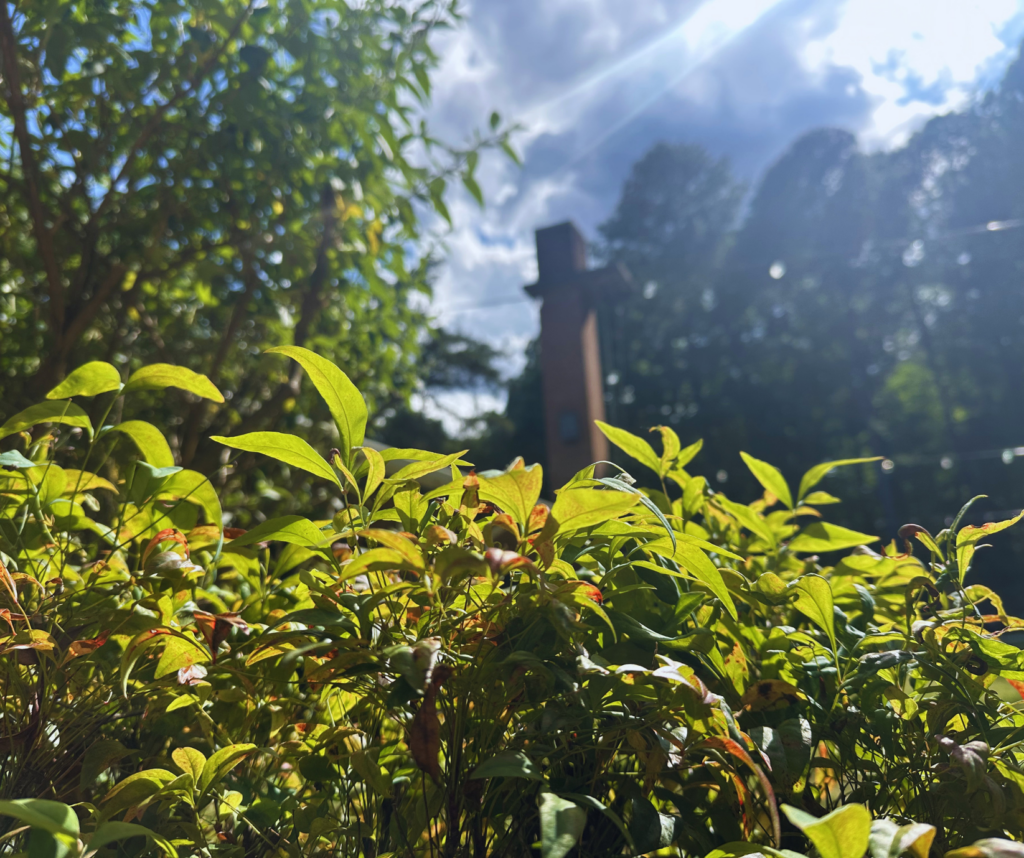
“The glory of God is the human being fully alive.”
–Irenaeus, second century
“Don’t ask what the world needs. Ask what makes you come alive, and go do that, because what the world needs is more people who have come alive.”
–Howard Thurman
We are living in harsh times. With the current authoritarianism in our country, we are besieged with anxiety, fear, anger, and creeping exhaustion. How do we stay grounded in this rugged time? How do we remain filled with life force when there are death forces at work? This is more than a political matter; it’s a spiritual matter.
To cope with the current stress, I remembered an earlier time when I felt fatigue and exhaustion. A friend said to me, “Go to a monastery. It’s a healing place.” I went, weeping as my wife drove me to the airport. I knew the coming weeks would be crucial for me.
“Where do you come most alive?” That was the question the monk asked me as we walked together on the monastery grounds.
Responding to his question, I said I come most alive when playing with my children, singing, backpacking in nature, connecting with people, and working on challenging justice matters like racism and poverty. The monk responded, “Where you come alive is where you are most spiritual.” That statement came from Brother David Stendl-Rast, my conversation partner. He helped me see that to be awake, aware, and attentive can lead to aliveness. That brief walk with him and my time with the other monks became a watershed moment in my life, a giant hinge on the door of my life and heart.
When that conversation happened, I was 52 years old in my seventh year as pastor of my third church, and I was exhausted after pushing too hard in a relentless 24/7 schedule. On this sabbatical leave, I had brought my tears and weariness to the monastery, as Bill Coffin said, “to pay a visit on myself, to see who’s at home.” Through tears, I discovered–or uncovered–the aliveness at the heart of my life.
I am now an elder looking back over the central themes of my life–relationships and aliveness are at the top of the list. Brother David helped me get clear about aliveness. My life is grounded and fueled by aliveness, which I experience through relationships that give me energy and invite me to come alive.
The irony is that it took near exhaustion to show me that my aliveness had been covered over by grief, stress, and fatigue. Grief from presiding at too many funerals, leaving me with backed up tears, and a busyness that left me weary to my bones. I began to see a vital paradox: aliveness and grief are not opposites. Aliveness emerges, like plants, from the soil of grief and pain. “There is some strange intimacy between grief and aliveness,” writes Francis Weller. “Grief is suffused with life force.” (p. 9, The Wild Edge of Sorrow)
On that visit to the monastery, I was in their small library, in the stacks, when a book virtually jumped out at me. I grabbed it to read, “The earliest Christians had one central prayer: ‘Remove the deadness, make us fully alive.'” (Margaret Miles, Fullness of Life, p. 7)
The early Christians had discovered this life-affirming theme that has for many of us been covered over by too many dogmas and creeds, fatigue and busyness. The early Christians are calling us back to a central message of Jesus: “I have come that you may have life abundantly.” (John 10:10)
How do we internalize this promise of abundant life? Not mere existence, but LIFE. We already have it within us. God is life itself, and God dwells within each of us. Our job is removing the deadness, the barriers like inertia, fatigue, busyness, and preoccupations. To strengthen our connection with the divine force.
The experience of aliveness is really an experience of the divine life within us. Aliveness therefore is not some self-serving narcissism. Aliveness is relational. It thrives on relationships—with the inner Source, the natural world, and our community of friends and colleagues.
The crisis that sent me to a monastery resulted in a swift turn to focus on my inner life within the context of community. Following my first visit at the monastery, I met with a Catholic sister, Evelyn Mattern, who advised forming a practicing community. We gathered a group of colleagues for a monthly contemplative sit, with reflections after the silence. Soon the group got dubbed “the circle of sacred silence.” This group later morphed into being a “solidarity contemplative community,” and was finally named Peace Hill after the rustic hermitage where Sr. Evelyn Mattern lived.
In one of those early meetings following the silence, one person said “Silence gives us a gift that we cannot give ourselves.” For me, that gift is a heightened sense of “the aliveness of life” (Howard Thurman), an experience of “the rapture of being alive” (Joseph Campbell).
Part of my current practice is to sit with the Quakers in extended silence. It has become clear that our aliveness must be nurtured and restored as we work together toward a more just, compassionate society.
This nurture comes through intentional practices like silence, meditation, walking in the woods, yoga, breath prayers, chanting, singing–whatever practice that moves us away from the head and into the heart, which is the abiding place of love, mercy, compassion, wonder, gratitude, and… Aliveness.