



Peace Hill at Avila is a 501(c)(3) nonprofit organization located in Durham, North
Carolina, fulfilling a mission to nurture and teach contemplative and restorative practices
to build a more compassionate and just society. We offer a range of contemplative practices and programs that strengthen, enhance, and deepen the work of justice-driven individuals and organizations.
We encourage all to take the time to slow down, notice the fabric of our lives, and understand our connections to one another and the earth. As we quiet the noise coming in from our busy lives in our busy worlds, we can be nourished by stillness, thoughtful connection, and heartfelt presence. Toward this end, Peace Hill offers events for the general public and programs for nonprofit organizations and community-based groups.
Peace Hill has a broad appreciation for the many forms of contemplation, including meditation, mindfulness, reflection, prayer, time in nature, or walking the labyrinth. We draw from ancient and contemporary sources of wisdom across diverse faith and secular traditions to provide a range of contemplative offerings, including overnight and daylong retreats.
We serve as one of four organizational partners that together guide the Avila Center for Community Leadership. Peace Hill ensures the center remains a space where activists, organizers, and community members can find spiritual support, guidance, and rest. Avila provides a physical home for Peace Hill’s work and serves as the setting for many of our retreats, events, and gatherings. We offer guided contemplative practices to activists and organizers who use the center, and we serve as a resource for groups, congregations, corporations, and institutions in the broader community.
Mission
To teach and nurture contemplative and restorative practices that strengthen, enhance, and deepen the work to build a compassionate and just society.
The Peace Hill Covenant
We stand as a sign that God unifies rather than divides persons.
The covenant was written by Evelyn Mattern and is often read in unison at the start of Peace Hill retreats.
Through silence, we make space to listen to the mystery and to open our hearts to the world.
Mindfulness deepens our resistance to all forms of violence, including busyness and noise.
We seek to harness the energy of the spirit for service and action.
We covenant to honor the soul’s need for a daily discipline.
We begin with silence and also practice communal reflection, dialogue, holy reading, and ritual.
We affirm both the strength and struggle at the heart of interfaith and spiritual communion.
We remain alert to supporting the work of justice and peace in our troubled world.
We dwell in the beauty of creation.
Our Story
Peace Hill traces its origins to 1996 when a small group of people gathered for monthly meditation. Calling themselves “The Circle for Sacred Silence,” the leaders – Mel Willams, Claudia Horwitz, and Sister Evelyn Mattern – began to speak aloud the need for a monastic type of retreat center in the NC Triangle area.
Their vision was for a place where an interfaith community could gather for sacred reading and silent reflection, a place for individuals working for justice and peace to join together in prayer and presence.
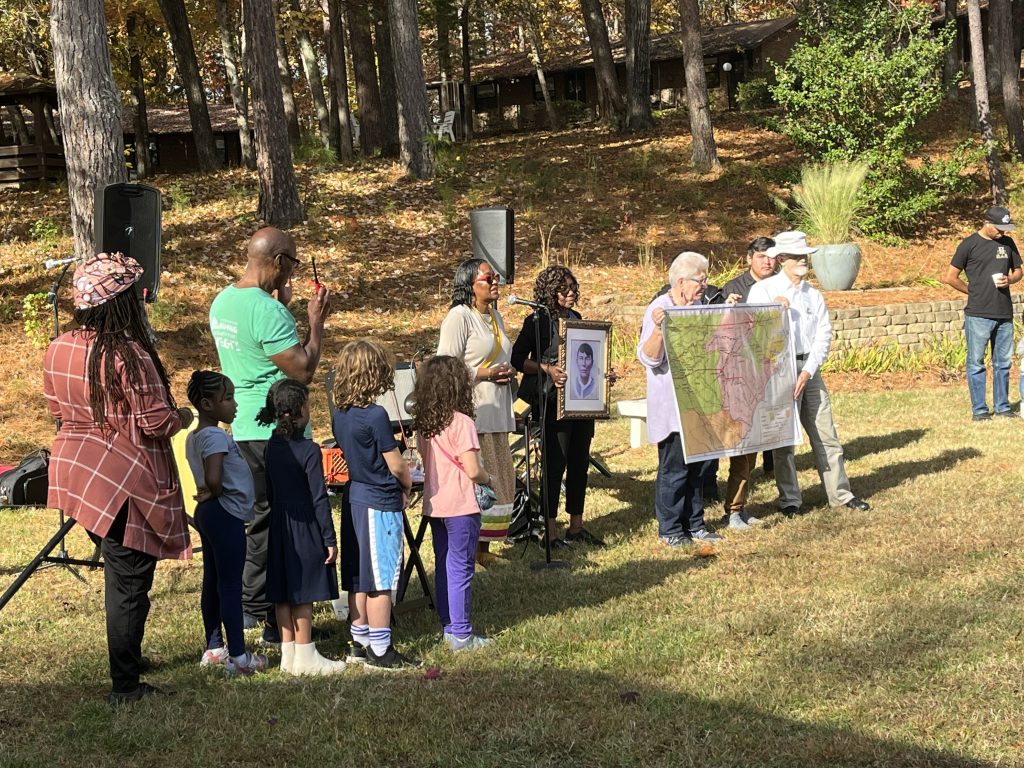
After identifying potential sites, the undertaking suffered a great loss when Sister Evelyn died in 2003. After her death, the group adopted the name Peace Hill in honor of Sister Evelyn’s spirit and the name of her hermitage home in Rolesville, NC.
Peace Hill gathered at various locations before eventually holding regular morning silence at Dot Borden’s home in Durham. Daylong Peace Hill retreats were held at both The Stone House in Mebane, a sister program founded and directed by Claudia Horwitz until its closing in 2015, and at Dot Borden’s home.
Peace Hill continued to explore potential sites for a more permanent home. In December 2019, Mel Williams learned that the Center for Community Self-Help had purchased Avila, a retreat center on 50 acres of land with residential and meeting accommodations, which was formerly owned and operated by the Catholic Church. Upon learning that Self-Help was repurposing the campus as a training center for community organizers, Mel suggested to Martin Eakes, the Founder and CEO of Self-Help, that Peace Hill could be an effective partner for this effort.
Martin agreed that Peace Hill with its substantial history and emphasis on practices that included meditation, mindfulness, prayer, reflection, and holding silence, was the group that could provide these opportunities. Peace Hill then became part of the financial and collaborative leadership team for the repurposed center.
Starting in early 2020, the work to refurbish Avila moved forward. Within a year, training conferences were being held at Avila. Meanwhile, Peace Hill used the time to build its organization: it incorporated as Peace Hill at Avila, formed a board of directors, and received its 501(c)(3) certification as nonprofit, tax-exempt organization in 2022.
Peace Hill joined the other Avila collaborative partners, including United for a Fair Economy (UFE) and Union of Southern Service Workers (USSW), to work with Self-Help to develop operational and usage guidelines for groups using the space. The partners decided to retain the Avila name, as it had a historically positive identity throughout the community.
Avila first opened as a Carmelite monastery for women in the 1950’s. It took its name from Teresa of Avila, a prominent 16th century mystic, teacher, and businesswoman. Her spirit, along with Sister Evelyn Mattern and Howard Thurman, an African American mystic, writer, and teacher, are the primary animators for Peace Hill at Avila. Their writings and teachings provide sources of ancestral heritage for Peace Hill.
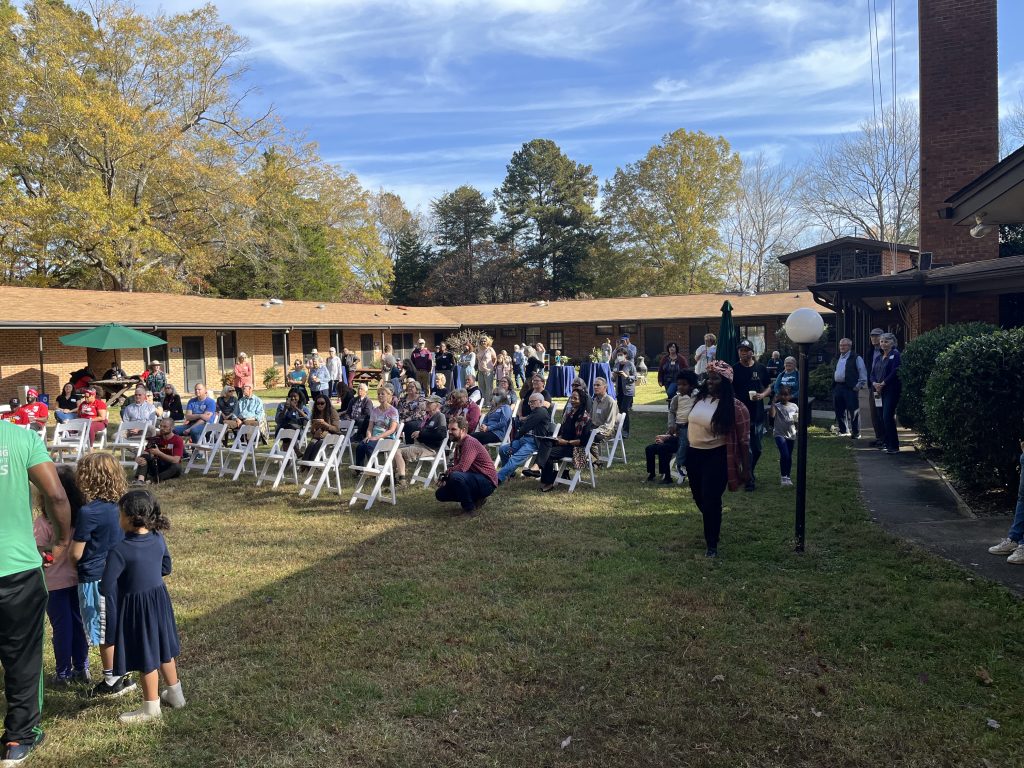
Peace Hill began offering contemplative and spiritual practices to groups utilizing the Avila Center in 2021 and hosted its first events at Avila in 2022, opening the center to the wider community. The first part–time staff member was hired in 2024, who then became full-time in 2025.
Though Peace Hill has grown considerably, our purpose and vision were articulated many years ago by Sister Evelyn Mattern, who embodied the meaning of a contemplative activist:
Unless action arises from spirit, it’s empty. And if spirit claims all the territory and never gets its hands dirty in the marketplace, it too is empty. I don’t know that I’ve integrated those things. But I’ve quested after it.
Sister Evelyn Mattern